INKR — Comics, Manga, Webtoons
- 4.0
- Rating
- 500.00K
- Installs
- Free
- Price

 Analysis by App-foxy
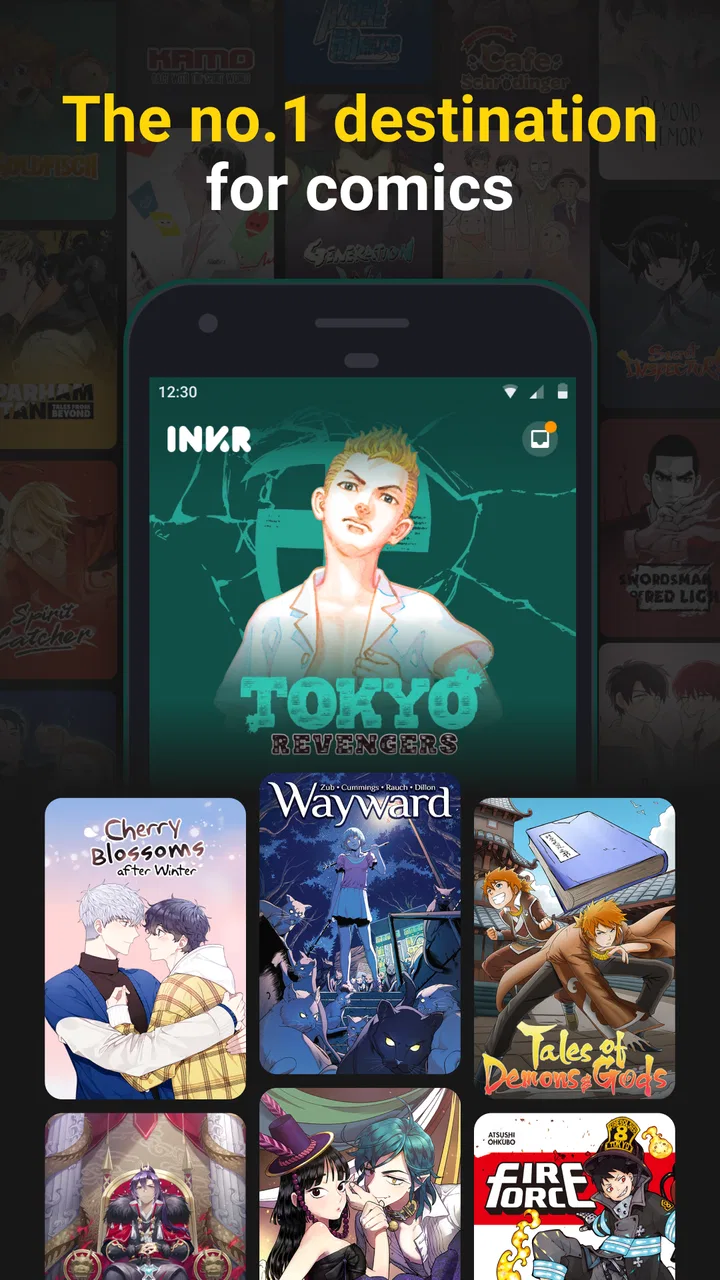
I spent time with INKR as a comics app rather than treating it like a simple digital shelf, and my impression is that its biggest appeal is the way it encourages a regular reading habit. The focus is on comics, manga, and webtoons, with a free starting point and an ongoing stream of material to explore. For someone who wants a convenient place to read on a phone or tablet, it feels more approachable than managing scattered browser tabs or buying individual volumes without knowing whether a series will hold attention.
The app is made by INKR Comics and is free to install. It sits in the Comics category, carries a Teen content rating, and has reached over 500 thousand installs. Its average score is 4.0 from around 9 thousand ratings, which suggests a generally positive experience with enough room for personal preferences and occasional friction. I would describe it as a good fit for curious readers who enjoy discovering series gradually, not necessarily for someone who wants a completely unrestricted library or a replacement for every specialist manga service.
How the reading experience works in everyday use
I focus on the small choices that make a comics app comfortable to return to: what I read first, how I handle interruptions, and when I stop browsing and settle into a story. In everyday use, a short sample can help me judge whether a series suits my eyes and available time before I commit. That practical rhythm leads naturally to the question of how each reading session actually unfolds.
You May Also Like

 Blood Strike: 2.5 Anniversary
Blood Strike’s Loadouts Turn Every Drop Into a Tactical Gamble
A close look at Blood Strike’s custom loadouts: how fast access to signature weapons reshapes its battle royale rhythm, rewards preparation, and narrows the gap between fights.

 Pandora - Music & Podcasts
Pandora’s Music Is Easy to Start, but Harder to Recover
Pandora’s strength is its low-effort path from a seed to a station. Its weak spot is how much confidence it asks you to place in connection, setup, and quiet recovery.

 8 Ball Pool
 Is Built on Rivalries, Rematches, and Routine
A close look at the rivalries, rematches, shared routines, and unanswered safety questions that turn a quick pool match into a persistent mobile community.

 Samsung Music
’s Quiet Strength Is Playing What You Already Own
Its reach comes less from spectacle than from dependable access to a personal library. That simplicity is both the app’s strongest retention engine and its ceiling.

 AccuWeather: Weather Radar
AccuWeather Review: A Quick, Clear Forecast for Everyday Decisions
For everyday plans, the best forecast is the one you can understand quickly. AccuWeather makes rain timing, radar, and local conditions easy to act on, with a few trade-offs.

 Hill Climb Racing
Why Hill Climb Racing Still Turns Crashes Into One More Run
A tiny car, a bumpy hill and one more upgrade: Hill Climb Racing keeps resurfacing because its simple chaos makes every near-miss feel personal.
More From Our News Desk



Finding a comfortable path through the catalog
My first useful observation is that a comics app succeeds or fails before the first page of a chapter. If browsing feels tiring, readers stop looking. INKR’s value comes from reducing that starting hesitation: I can open it with the intention of reading “something” rather than arriving with a specific title already in mind. That makes it especially suitable for short breaks, commuting, or the end of the day when I want a low-effort choice.
The store summary emphasizes daily updates and free chapters, and that combination shapes how I approach the app. I do not treat it like a one-time download followed by a finished collection. Instead, I check in, sample a chapter, and decide whether a series deserves more of my attention. This is a useful workflow for readers who dislike committing to a long book immediately. It also means the experience rewards patience and regular browsing more than one large weekend reading session.
Navigation matters even more for people who read with different visual, cognitive, or physical needs. A clean route from discovery to chapter is easier to manage than a crowded interface full of unfamiliar controls. I found the best habit was to keep my reading goal simple: choose one series, open the next available chapter, and avoid spending too long scrolling when I was already tired. This is not a hidden setting, but it is a practical way to reduce decision fatigue.
Readability depends on the format you choose
Comics are not ordinary text, so readability is tied to panel layout, lettering, contrast, and the amount of movement required to follow a page. Manga pages often ask me to inspect details across a larger composition, while webtoon-style reading can feel more natural on a narrow phone screen because the story unfolds vertically. That difference is important for readers who find repeated zooming uncomfortable or who lose their place when a page has many small panels.
I would not assume that every title will feel equally accessible simply because it appears in the same app. The artwork, lettering size, speech-bubble placement, and translation choices can vary from one series to another. When I am unsure about a title, I prefer to read a sample chapter before deciding whether it works for my eyes. That small test tells me more than the app’s general presentation because a beautifully designed interface cannot fix cramped lettering inside a particular comic.
A useful approach is to hold the device at a steady distance and read in short sections rather than forcing a full chapter when the page design is demanding. On a phone, I found that turning the device or enlarging a difficult panel can help, but doing so repeatedly becomes a barrier of its own. Readers with low vision may therefore prefer titles with generous lettering and clear panel structure, while readers who need a stable visual rhythm may find vertically arranged episodes easier to follow than dense traditional pages.
Navigation for readers with different abilities
For readers with attention difficulties, the app’s chapter-based structure can be both helpful and limiting. A clear episode boundary gives me a natural stopping point, which is useful when I need to divide reading into manageable sessions. On the other hand, the temptation to continue through a growing list of available chapters can make it easy to lose track of time. I recommend deciding in advance whether the goal is one chapter, a short discovery session, or a longer reading block.
Readers who rely on screen magnification or system-level display adjustments should test how those tools interact with comic pages rather than assuming the result will match ordinary text apps. Enlarging an interface is different from enlarging artwork: the former can improve button visibility, while the latter may require more panning and can make panel order harder to judge. I found that the most comfortable setup depends heavily on the individual comic, so a short sample is the safest way to evaluate it.
People who are sensitive to visual clutter may appreciate a focused reading screen more than a busy social feed, but discovery pages can still encourage extended browsing. My practical tip is to separate “finding something new” from “actually reading.” I browse when I have the energy for it, then return to a chosen title when I want a calmer session. That simple separation makes the app feel less demanding and helps preserve concentration.
Motor and sensory considerations in real situations
Long-pressing, tapping small controls, swiping through pages, and repeatedly adjusting the view can be tiring for readers with limited hand movement, tremors, joint pain, or temporary injuries. Comics are particularly sensitive to this because the reading flow can break if a gesture is missed. I found that a phone stand or a supported grip can make a bigger difference than expected: keeping the device steady reduces the need to reposition it between panels.
For one-handed use, a compact phone is convenient but can make detailed pages harder to inspect. A larger screen offers more room for artwork, yet it may require more hand movement or two-handed support. I would choose the device based on the type of comic I planned to read rather than assuming the biggest screen is always best. Vertical webtoons tend to suit a narrow portrait setup, while intricate manga pages benefit from enough display area to reduce constant enlargement.
Visual sensitivity is another consideration. Bright artwork, rapid panel changes, strong contrast, or dense action scenes can become tiring even when the lettering is clear. I prefer reading with moderate screen brightness and regular pauses, especially at night. That is general device advice rather than a special INKR feature, but it is relevant because the app places many visually intense pages in a continuous reading context.
Readers who are sensitive to sound should also think about where they use it. My experience with comics is naturally quieter than watching video, which makes the app suitable for a library, waiting room, or shared bedroom. Still, a quiet reading environment does not automatically solve every sensory issue: bright imagery, rapid scrolling, or a busy discovery session can remain overstimulating. The strongest advantage here is the basic nature of the medium, not a promise that every title will feel calm.
Situational access: commuting, fatigue, and interrupted time
INKR makes the most sense to me in fragmented parts of the day. I can imagine opening it while waiting for an appointment, reading a few pages during a lunch break, or checking a newly available chapter before bed. The free-chapter approach lowers the risk of wasting that limited time on a series I do not enjoy. It also lets a new reader understand the tone and pacing before spending anything inside the app.
Interrupted reading is where chapter structure becomes especially useful. If I have only a few minutes, I can stop at a panel or episode boundary without needing to remember a complicated place in a long prose chapter. That said, comics can be surprisingly easy to lose track of when I return after a busy day, particularly if several series are being explored at once. I recommend keeping the active list small and finishing a short sample before opening several more titles.
For users with fluctuating energy, the app can support different levels of commitment. A light comedy chapter may be manageable when concentration is low, while a complicated fantasy or action series might require a quieter period. I would not judge the whole service by one difficult reading session. Instead, I would test several genres and formats, because the accessibility of the experience is often determined by the individual work rather than the catalog label.
Travel and unreliable connectivity are areas where I would plan ahead rather than assume the app will cover every situation. Before depending on it for a flight, a long trip, or a place with weak service, I would check how the specific reading session behaves in that environment. I do not like discovering a limitation only after starting a journey. For a reader who needs guaranteed offline access above all else, a service built explicitly around downloaded books may be a safer choice.
Free reading, purchases, and the point where friction begins
The app is free, which makes trying it straightforward, but it also includes in-app purchases ranging from $1.99 to $104.99 per item. That range is important for anyone managing a strict budget or trying to avoid accidental spending. I recommend treating free chapters as a sampling tool, not as proof that an entire long-running series will remain free. Before becoming invested, I would check the chapter path and decide what level of paid reading feels comfortable.
This model can be convenient when I want immediate access to one particular continuation instead of buying a complete volume. It can also feel less predictable than purchasing a paperback or a clearly packaged digital book. The trade-off is flexibility versus cost clarity: small individual choices may suit casual readers, while a reader who wants to own a complete collection may prefer a traditional ebook or a service with a clearly defined subscription library.
For younger users, the Teen rating and the presence of purchases make adult supervision sensible. A parent or guardian should look at the individual titles a young reader is choosing, not just the broad Comics category. The rating gives useful context, but comics cover many tones and subjects. I would also discuss spending boundaries before handing over a device, because the easiest way to avoid unpleasant surprises is to agree on a reading budget in advance.
What the current version means for practical use
The current version is 2.13.5, and the app supports devices running Android 6.0 or later. That gives it a relatively broad reach for Android users who are not on the newest hardware. Still, compatibility is only the first question. Older phones may offer less comfortable screen space, slower page handling, or a battery that struggles during long sessions. I would judge the experience on the actual device I plan to use, especially if reading comfort depends on magnification or a larger display.
The developer is INKR Comics, and the app has been available since October 12, 2020. Its established presence and install base make it feel less like an experimental reader, but popularity does not remove the need to check whether its catalog and reading style suit me. I care more about how easily I can read the titles I want than about the age of the app itself.
Remaining barriers I would want readers to consider
The first barrier is variation between titles. A reader may find one series comfortable and another exhausting because of tiny lettering, intricate panels, unusual reading direction, or a visually intense art style. This is unavoidable to some extent in a broad comics service, but it means accessibility cannot be evaluated from the home screen alone. Sampling is essential, particularly for readers with low vision, migraines, dyslexia, or difficulty tracking complex layouts.
The second barrier is the tension between discovery and focus. Daily additions can be motivating, but a constantly changing selection may encourage browsing instead of reading. For readers with attention regulation challenges, I would use a deliberate routine: choose a title, read a defined amount, and leave discovery for a separate moment. The app is more manageable when I control the rhythm rather than letting the catalog dictate it.
The third barrier is financial uncertainty. Free entry is genuinely helpful, yet paid continuation can arrive after I have already become attached to a story. That is not a reason to reject the app, but it is a reason to make purchase decisions consciously. If predictable ownership matters more than frequent discovery, another format may be better. If sampling and occasional chapter purchases are appealing, INKR’s approach can work well.
There is also a social and environmental barrier that is easy to overlook: not everyone reads comfortably in the same place. A person with fatigue may need breaks; someone with limited mobility may need a stand; a reader sharing space may need low brightness and quiet operation. I found that the app is easiest to recommend when paired with a supportive setup rather than treated as the entire accessibility solution.
Who should use it, and who should look elsewhere
I would recommend INKR to readers who want a free way to explore comics, manga, and webtoons, especially those who enjoy returning for new material instead of buying a complete library upfront. It is also a reasonable choice for someone who reads in short bursts and wants a chapter-oriented routine. The combination of discovery and free sampling makes it less intimidating than committing to a long series immediately.
I would be more cautious about recommending it to readers who need uniform readability across every title, guaranteed control over visual presentation, or a completely predictable cost for finishing a series. Those readers may be happier with accessible ebooks, print editions they can choose in a larger format, or a subscription service whose catalog and payment structure are easier to understand. Someone who mainly wants to read one known publisher’s complete backlist should also compare specialist alternatives before settling here.
My most useful advice is to test the app in the exact situation where you plan to use it. Try a free chapter on your usual phone, with your normal brightness, grip, magnification, and reading distance. Check whether the lettering feels comfortable, whether panel transitions are easy to follow, and whether the payment model fits your budget. That short trial answers more practical questions than a general rating can.
My inclusive verdict after using it
INKR is a capable comics reader with a welcoming entry point and a format that can fit naturally into interrupted daily schedules. I like that I can investigate a series before making a commitment, and I think the focus on regular updates gives the app a reason to revisit it. The experience is strongest for readers who enjoy variety, can adapt to different comic layouts, and are comfortable deciding when free sampling should become paid reading.
Its inclusive value is real but conditional. The app can support different abilities and contexts through the flexibility of digital reading, yet the actual comfort depends heavily on the title, device, gestures, visual design, and the reader’s environment. I would not promise that it solves accessibility needs by itself. I would describe it instead as a flexible starting point that rewards personal testing.
After weighing the convenience against the layout variation and purchase decisions, I would recommend giving it a careful trial rather than making a blind commitment. If its free chapters feel comfortable on your device and its selection matches your interests, it can become an enjoyable everyday reading companion. If you need consistent typography, complete ownership, or a tightly controlled reading environment, another comics format may serve you better. For curious readers who want to discover stories without paying at the door, however, INKR earns a place on the shortlist.
FAQs for INKR — Comics, Manga, Webtoons
01What types of content can I find on INKR?
INKR offers a diverse range of content, including comics, manga, manhua, and webtoons from various genres. Whether you’re into action, romance, fantasy, or slice-of-life, you’ll find something that suits your taste. The app regularly updates its library, ensuring users have access to the latest releases and popular titles.
02Is INKR free to use or does it require a subscription?
INKR operates on a freemium model, allowing users to access some content for free. However, to unlock premium content and enjoy an ad-free experience, users can opt for a subscription. Various subscription plans are available, offering flexibility to choose one that fits your reading habits and budget.
03Can I download content for offline reading on INKR?
Yes, INKR allows users to download comics, manga, and webtoons for offline reading. This feature is especially useful for those who want to enjoy their favorite stories without an internet connection. However, offline reading might be limited to premium subscribers, so checking the specific terms is advisable.
04How frequently is new content added to INKR?
INKR updates its library frequently with new chapters and titles. Users can expect regular updates to keep up with ongoing series and discover new ones. The app provides notifications for new releases, ensuring that fans never miss an update of their favorite series.
05Is INKR available on both Android and iOS devices?
Yes, INKR is available for download on both Android and iOS platforms. Users can find the app on the Google Play Store and the Apple App Store, making it accessible to a wide range of devices. The app is optimized to provide a smooth reading experience on smartphones and tablets.
Pros
- Extensive library with diverse genres.
- Smooth and intuitive user interface.
- High-quality images and translations.
- Offline reading mode available.
- Regular updates with new content.
Cons
- Limited free content
- subscription needed.
- Some titles not available globally.
- Occasional app crashes reported.
- No option for user-generated content.
- Ads present in the free version.

INKR — Comics, Manga, Webtoons
Gallery